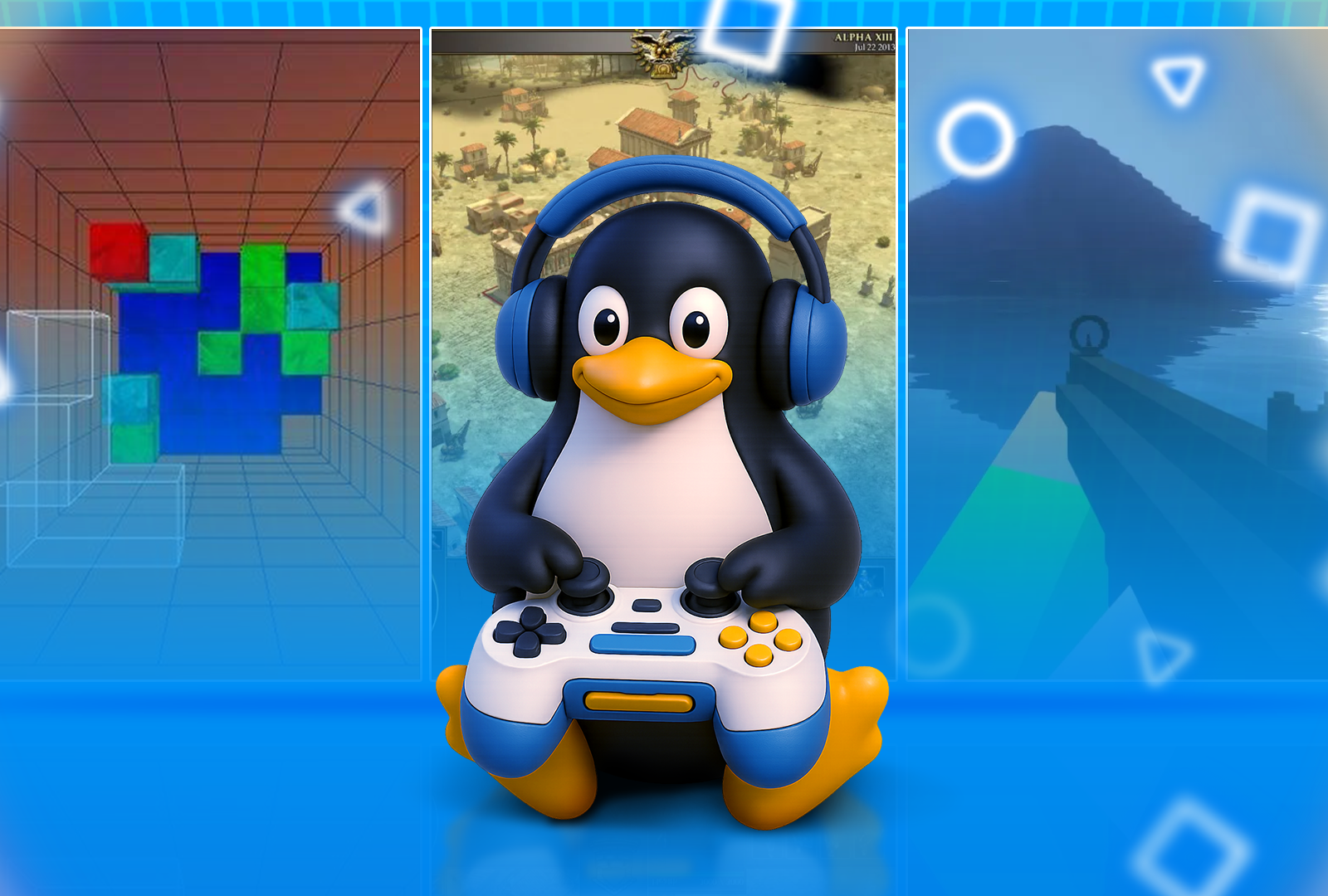
Gaming and Linux
The gaming experience on Linux has improved dramatically in recent years, although historically it was a weak point.
Proton and Steam Play: The most crucial tool is Proton, developed by Valve (owners of Steam). Proton is a Wine-based compatibility layer that allows Linux users to run thousands of Windows games without modification. Steam integrates this with Steam Play, making the experience almost as smooth as on Windows.
Graphics APIs:
The development and adoption of the open-source Vulkan graphics API has greatly benefited Linux, providing performance that often rivals or surpasses Microsoft's DirectX.
Hardware and Drivers:
Hardware manufacturers (especially NVIDIA and AMD) have improved the quality and support of their drivers for Linux, which is essential for the performance of modern games.
Handheld Consoles: The success of the Steam Deck (a Valve handheld console running SteamOS, an Arch-based Linux distribution) has further boosted compatibility and game development for the Linux ecosystem.
Linux and Blockchain
Linux is fundamental to the blockchain and cryptocurrency ecosystem.
Server Infrastructure: The vast majority of blockchain nodes, exchange servers, and mining pools run on Linux-based servers (such as Ubuntu or CentOS). This is due to their stability, security, open-source nature (which allows for auditing and customization), and resource efficiency.
Development: Developers often prefer Linux environments (or macOS, which is similar in its UNIX base) for writing, compiling, and deploying smart contracts and decentralized applications (dApps).
Mining Rigs: Many mining rigs use customized lightweight Linux distributions to optimize graphics card (GPU) management and energy efficiency.
Gaming and Blockchain (Web3 Gaming)
This is the newest and fastest-growing intersection, known as Web3 Gaming, Play-to-Earn (P2E), or NFT gaming.
Asset Ownership: Blockchain allows players to have verifiable ownership of their in-game assets (skins, weapons, virtual land) through Non-Fungible Tokens (NFTs). This means that items have value outside the game and can be bought, sold, or traded on secondary markets.
Real Economy (P2E): The "Play-to-Earn" model allows players to earn rewards with real economic value, often in the form of cryptocurrencies or NFTs, simply by playing or contributing to the game's ecosystem.
Decentralization: In the future, the Decentralized Autonomous Organization (DAO) could allow the player community to have a say in the direction and development of the game, rather than relying solely on a central company.
Triple Connection Summary
Linux Facilitates Gaming: With Proton/Steam, gaming on Linux is viable and growing.
Linux Powers Blockchain: It is the standard operating system for node infrastructure and dApp development.
Blockchain transforms gaming: It creates new asset ownership economies (NFTs) and rewards players (P2E).



0 commenti:
Post a Comment